Kustomize and Helm Charts
Why Kustomize & Helm Exist: Making Kubernetes Manageable
Kubernetes promises declarative infrastructure and infinite scalability—but YAML sprawl is the hidden cost most teams discover too late.
As applications grow, so do:
- Environment-specific configs
- Repeated manifests
- Subtle differences between clusters
- Risky manual edits
Kustomize and Helm emerged to solve different parts of the same problem:
how to manage Kubernetes configuration cleanly, safely, and at scale.
Kustomize: Native Configuration Customization for Kubernetes
native -> supported by kubectl
The Problem Kustomize Solves
Kustomize answers a very specific and practical question:
“How do I customize Kubernetes manifests for different environments without duplicating YAML or introducing templates?”
Before Kustomize, teams commonly copied the same manifests into:
deployment-dev.yamldeployment-staging.yamldeployment-prod.yaml
This approach quickly led to configuration drift and maintenance pain.
How Kustomize Works (Conceptually)
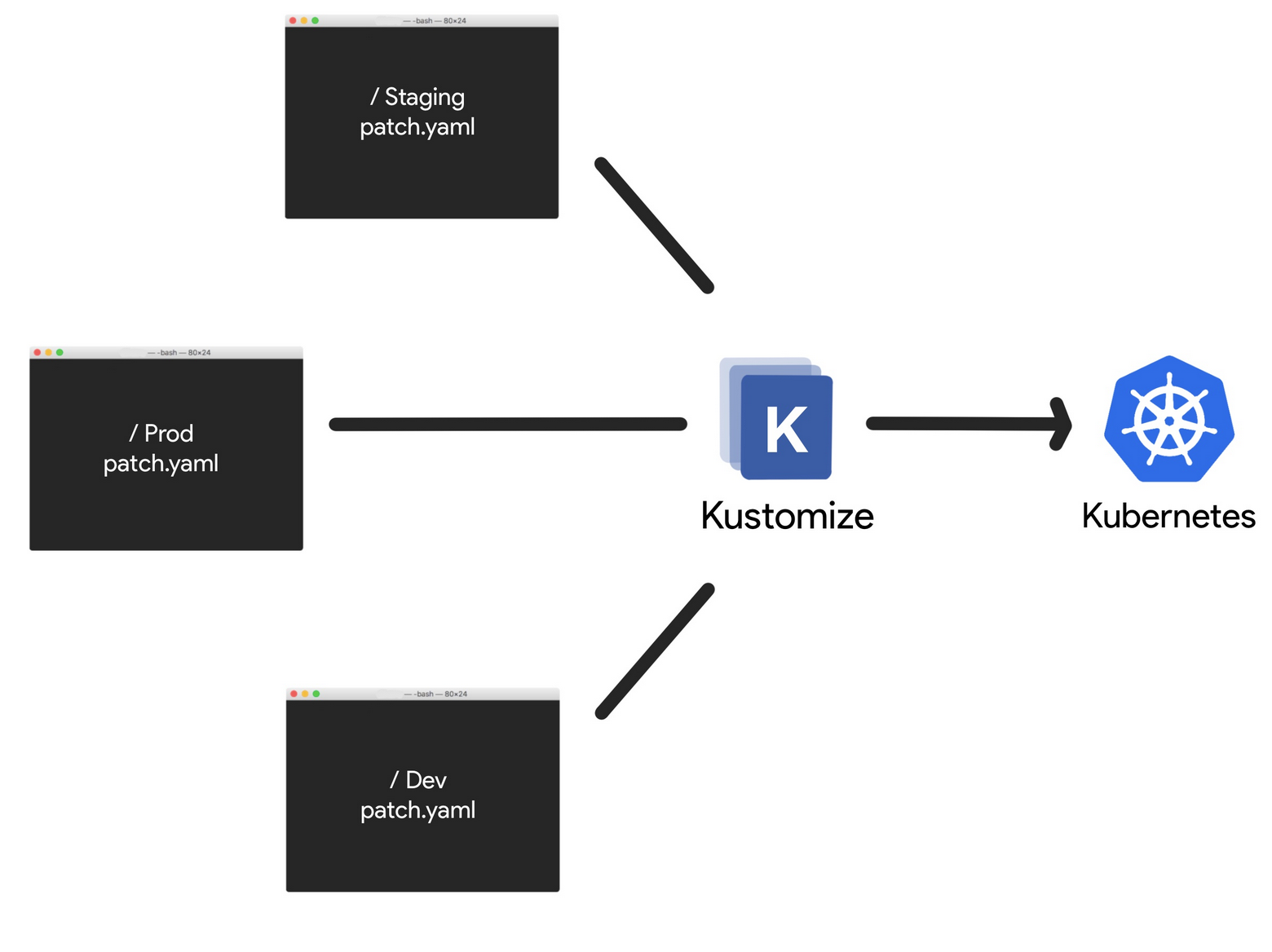
Kustomize is based on two simple ideas:
- Base → common, reusable Kubernetes manifests
- Overlay → environment-specific changes
Instead of editing YAML directly, Kustomize applies:
- Patches
- Label and annotation transformations
- Image tag updates
- Namespace injection
All without modifying the original files.
Importantly:
- There is no templating language
- YAML remains valid Kubernetes YAML
- Output is deterministic and predictable
When Kustomize Is a Strong Choice
- Environment-based configuration (dev/staging/prod)
- GitOps workflows
- Platform teams managing shared base manifests
- Teams prioritizing readability and auditability
Helm: Application Packaging for Kubernetes
The Problem Helm Solves
Helm tackles a broader and more complex problem:
“How do I package, version, configure, and distribute Kubernetes applications?”
Helm is less about patching YAML and more about treating Kubernetes apps as installable products.
If Kustomize is about customization, Helm is about distribution and lifecycle management.
How Helm Works (Conceptually)
Helm introduces a packaging model:
- Charts → application packages
- Templates → YAML with Go-based templating
- Values → inputs that control rendering
Instead of patching existing YAML, Helm generates YAML dynamically at install time.
This allows:
- Conditional resources
- Feature flags
- Highly configurable deployments
- Reusable, shareable charts
Why Helm Is So Widely Used
- Massive ecosystem of pre-built charts
- Built-in versioning and rollback
- Works well for complex, multi-component apps
- Standard tooling in many organizations
Tools like Prometheus, Grafana, and ArgoCD are commonly deployed using Helm.
Kustomize vs Helm: Choosing the Right Tool
- Helm to install and manage applications
- Kustomize to customize Helm output per environment